


Quick summary
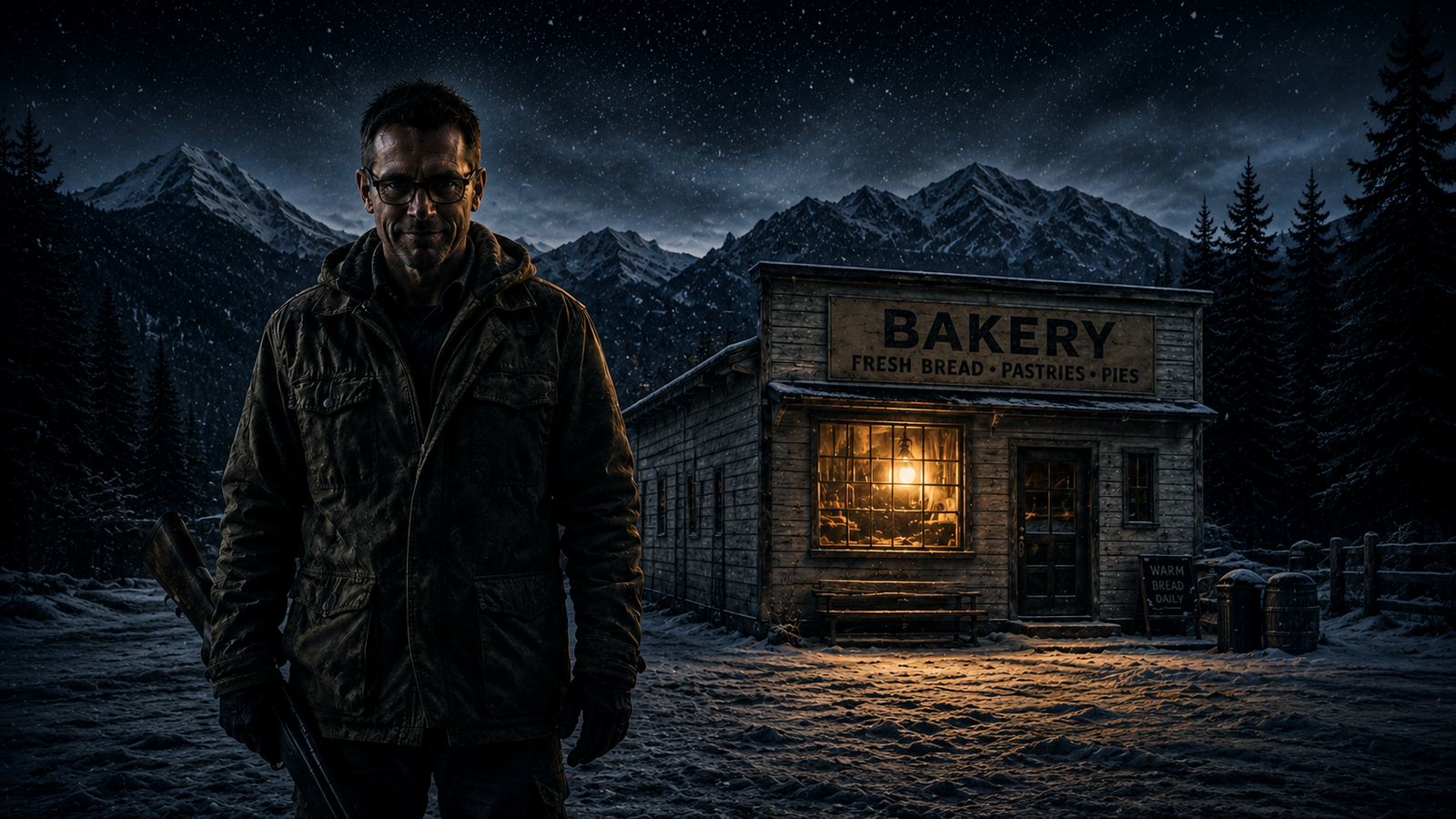
- In Anchorage, Alaska, Robert Hansen was known as a mild-mannered baker and family man.
- No one suspected that behind his shy exterior lay a predator who used his hunting skills to stalk women through the frozen wilderness.
NavigationIn this article
In the city of Anchorage, Alaska, many knew a quiet man named Robert Hansen.
He was a baker who owned a small shop, a married man and father of two, living a life that seemed so ordinary it was difficult to imagine that behind this shy face lay a terrifying secret.
Customers entered his bakery every day to buy bread and pastries, and some police officers frequented the place to drink coffee and buy donuts. To them, Hansen was nothing more than a quiet man of few words, who raised no suspicion and seemed incapable of hurting anyone.
But away from the bakery and his family life, there was an entirely different person.
A man who exploited his long experience in hunting and tracking animals to turn the vast Alaska wilderness into a theater for crimes that spanned years, claiming the lives of numerous women in one of the strangest and most horrific serial murder cases in United States history.
A Childhood That Forged an Angry Man
Robert Christian Hansen was born on February 15, 1939, in Estherville, Iowa.
His childhood was not easy.
He suffered from a stutter and severe acne, which made him a target for ridicule and bullying among his peers. He was deeply introverted, had few relationships, and constantly felt rejected by those around him.
As for his father, a strict Danish immigrant, he ran the family bakery and forced his son to work there for long hours, sometimes starting at two in the morning, even during school days.
Hansen grew up carrying a deep sense of inadequacy and rage.
It seems that the rejection he faced from women during his youth increased his bitterness, while he found in hunting and isolation within nature a means to escape from a society he felt never accepted him.
He learned to use rifles, track trails, and navigate the wilderness.
At first, it was just a hobby.
But these same skills would later turn into tools for crimes that are hard to imagine.
In 1960, when he was twenty-one years old, Hansen was involved in burning down a school bus garage, an act said to have a vengeful character toward the community in which he lived.
A young man working at the bakery participated with him, but the matter was uncovered after the latter's confession; Hansen was arrested and served time in prison.
Shortly thereafter, his first marriage ended in divorce.
But his true criminal life had not yet begun.
The Beginning of a New Life in Alaska
Years later, Hansen moved with his second wife to Alaska.
There, he began a life that seemed perfectly stable.
He had two children, opened a bakery, and became known in the local community as a shy, quiet man who worked hard and loved hunting.
His appearance did not suggest danger.
This is precisely what allowed him to hide for a long time.
In those years, Anchorage was witnessing major changes due to economic activity related to oil projects and the Alaska Pipeline. Thousands of workers arrived in the city, and with them grew the nightlife, bars, and entertainment venues.
Amidst this changing society, Hansen found the environment that allowed him to seek out his victims away from prying eyes.
Between the early 1970s and 1983, a long series of disappearances and assaults began that no one initially understood were linked to a single man.
When the Hunting Hobby Turned into a Nightmare
Hansen mostly targeted women living on the fringes of society, including dancers and sex workers.
Choosing these women served him in another way.
At that time, their disappearances did not always receive the same attention as other cases, and Hansen realized that the absence of some might pass for days or weeks before anyone began a serious search for them.
He lured his victims in various ways, then kidnapped and assaulted them.
In some cases, he transported them to remote areas outside Anchorage using his car or his private plane.
There, in the middle of the vast Alaska wilderness, there were no nearby roads, no houses, and no witnesses.
According to his confessions and subsequent investigations, in some cases, he would let the victim run into the wild and then hunt her down as if she were an animal on a hunting trip.
He used rifles and hunting weapons, then left the bodies in remote, hard-to-reach areas.
His experience with nature helped him.
He knew well that Alaska, with its massive spaces, forests, rivers, and harsh weather, was capable of hiding secrets for years.
And perhaps forever.
The Girl Who Got Away
Hansen's crimes continued for years, but one mistake was enough to open the door to his end.
In 1983, he kidnapped a seventeen-year-old girl named Cindy Paulson.
He held her captive and assaulted her, and was preparing to transport her in his plane to a remote area outside the city.
The scenario resembled what had happened to other women.
But this time, things did not go as planned.
In a decisive moment, Cindy managed to escape.
She ran for her life until she reached a safe place, then reported what happened to the police.
She provided a precise description of her kidnapper, his car, his plane, and the place where she was held.
When the police began the investigation, they came across the name Robert Hansen.
But it was not easy.
To many, Hansen seemed like an ordinary citizen; he even tried to provide an alibi to support himself and deflect suspicion.
However, investigators were not convinced.
They began looking into his past record, the missing women, and the bodies found in wilderness areas around Anchorage.
Slowly, the scattered pieces began to come together into one terrifying picture.
The Map That Revealed the Graves
When investigators obtained a warrant to search Hansen's home, the truth began to emerge.
They found weapons, ammunition, personal items, and jewelry linked to several missing women.
Forensic tests also revealed evidence linking some of his weapons to crimes the police were investigating.
But one of the most terrifying discoveries was a map of Alaska that Hansen kept.
The map bore marks in multiple remote areas.
As the investigation progressed, it became clear that a number of these marks pointed to locations associated with his victims.
The case was no longer just suspicion.
Investigators were facing a man who had lived a double life for years.
By day, he stood behind his bakery counter selling bread to his customers.
In his secret world, he knew the locations of the graves of women who had disappeared without their families knowing what had happened to them.
Frank Rothschild, the Assistant District Attorney who worked on the case, participated in questioning Hansen.
During the confrontations with him, investigators explained that they could wait until the snow melted, then search the locations marked on the map, collect evidence, and compare it to his weapons.
At that point, Hansen began to realize that the room for denial was narrowing.
Soon, his confessions began to reveal the scale of the disaster.
Confessions of the Hunter
Robert Hansen confessed to killing 17 women, in addition to raping about 30 other women during his years of criminal activity.
However, some investigators remained convinced that the true number might be higher.
As part of a plea deal, Hansen cooperated with the authorities and provided information about the locations of several victims in exchange for avoiding a long series of separate trials.
Investigators took him by air over areas north of Anchorage, and from the plane, he pointed to the places where he had buried or left his victims.
Some locations were so remote that they could not be easily reached except by plane.
Search teams began heading to the places he identified.
The remains of several women were found.
But not everyone he confessed to killing was found.
Some stories remained without a clear ending.
Names Returning from the Unknown
For many years, some victims remained nameless.
The police knew they had been killed, but they did not know who they were.
One of the most famous of these cases was a woman whose remains were found near the Eklutna area, and she became known as "Eklutna Annie."
Decades passed, and forensic techniques, DNA analysis, and genetic genealogy advanced; yet her identity remained a mystery for a long time, and attempts to learn her real name and return her story to her family continued.
In another case, a victim was known for years as "Horseshoe Harriet."
Decades after her remains were found, modern DNA techniques were able to reveal her identity.
She was a girl named Robin Pelkey, nineteen years old when she was killed.
After nearly four decades, her name finally returned to her.
She was no longer just a nickname in a police file.
She became a human being with a name, an age, and a story.
The End of Robert Hansen
Hansen was sentenced to long prison terms that ensured he would remain behind bars until the end of his life.
He was no longer the quiet baker people saw every morning.
His secret life was exposed, and his name turned into one of the most terrifying names in the history of crime in Alaska.
He spent the rest of his life in prison.
On August 21, 2014, Robert Hansen died at the age of 75.
But his death did not close all the files of the case.
Questions remained about potential victims who were never found, about women whose disappearances might not have been linked to him, and about the identity of some remains that needed decades to reclaim their names.
The story of Robert Hansen was not terrifying only because of the number of his victims.
But because of the frightening contradiction between the man the community knew and the man who lived in the shadows.
A quiet baker.
A husband and father.
A neighbor who seemed ordinary.
And a man who kept in his secret world a map leading him to the death sites of women he hunted in the most isolated areas of Alaska.
Perhaps this is why his story remained stuck in the memory.
Because monsters in stories often look scary from the first moment.
But in reality, they might stand behind a bakery counter, smiling at customers, and selling them bread every morning.
Author: B.Bouziane
Have a thought or question about this article?
Continue the conversation in the community and share your ideas with readers and writers.

Comments 0
Share your thoughts respectfully. Abusive or disruptive comments may be hidden.